Reviewed and updated 3 September 2026. General owner education, not individual legal, veterinary or behaviour advice.
Fit comes before training
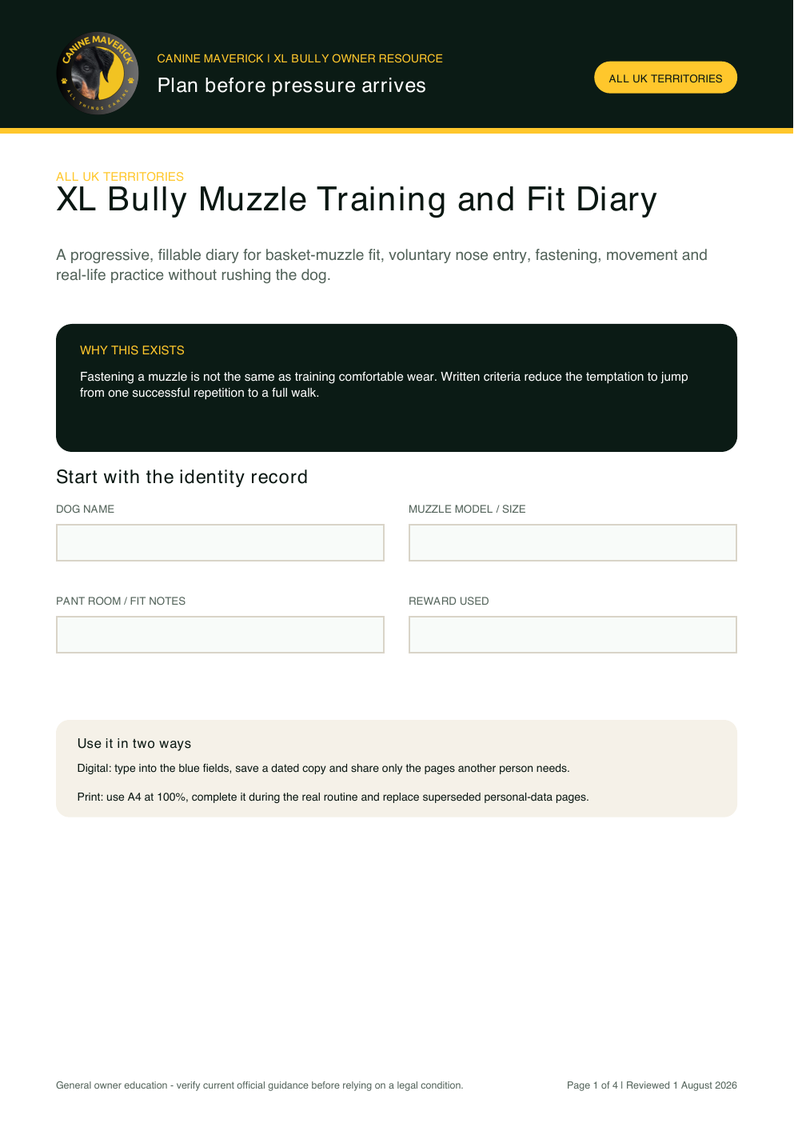
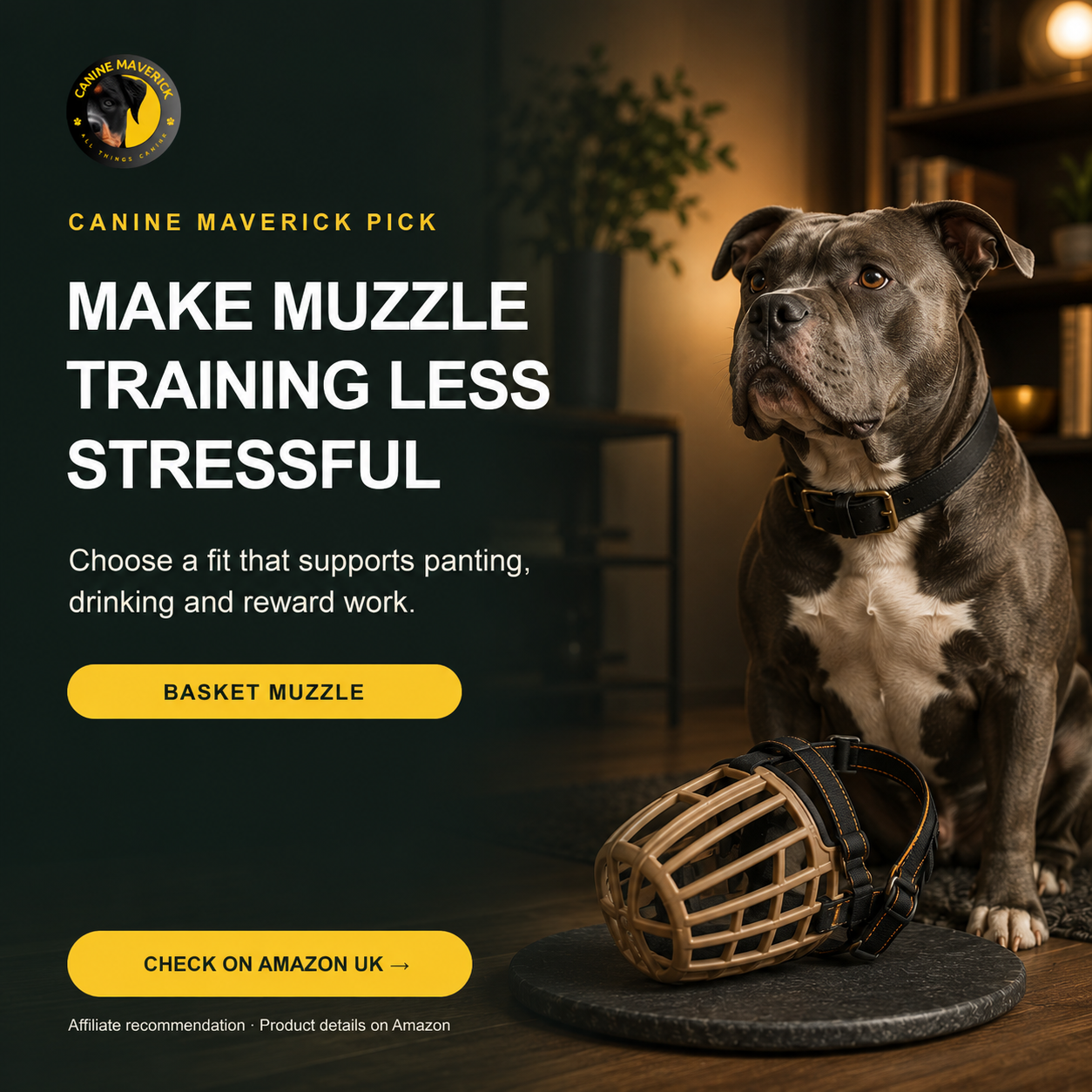
A suitable basket muzzle leaves enough depth for a full pant, does not press into the eyes, does not rub the nose and cannot be pulled off easily. The dog should be able to drink and receive appropriately sized rewards. A tightly closed fabric muzzle is not suitable for routine public walking.
Stage 1: make the muzzle predict good things
Work in a quiet room. Show the muzzle, mark calm interest and place food around it. Hold it still at nose height and let the dog choose whether to approach. Never push it towards the face. Place food at the opening, then gradually farther inside while the dog remains free to withdraw.
Stage 2: voluntary nose entry
Pause before adding food. When the dog deliberately places its nose inside, mark and feed through the front. Build from one second to several seconds without rushing. If the dog backs away, paws, freezes or stops taking food, return to the last easy step.
Stage 3: straps and fastening
Separately pair the sound of the clip with food. Touch and lift the straps briefly while the dog chooses to keep its nose inside. Progress to fastening for one second, feeding and releasing. Increase time gradually rather than jumping from one second to a full walk.
Stage 4: movement and real life
Practise a few indoor steps, familiar cues and calm sniffing. Move to a secure garden, then a very quiet outdoor location. Keep early walks short and reward relaxed behaviour. Continue to avoid triggers; a muzzle reduces bite risk but does not make a worried dog feel safe.
Troubleshooting
- Pawing: distract calmly, remove the muzzle and shorten the next repetition.
- Rubbing: reassess fit and check skin for irritation.
- Won’t approach: place food near the muzzle without holding it and seek professional help if fear persists.
- Must wear it immediately: prioritise safety, but keep emergency use separate from gradual training where possible.
Training source
This progression reflects Dogs Trust’s step-by-step muzzle-training guidance. For significant fear, handling difficulty or aggression, involve your vet and an appropriately qualified behaviour professional.
Frequently asked questions
What type of muzzle should an XL Bully wear?
A secure basket-style muzzle that allows a full pant, easy breathing and drinking is usually appropriate for routine public use. Fit the individual dog.
How long does muzzle training take?
It varies. Some dogs progress over days; worried dogs may need weeks. Comfort and reliability matter more than speed.
Does a muzzle fix aggression or reactivity?
No. It reduces risk but does not change the emotion driving behaviour.