Breed Central
The Rottweiler: Beyond Hype and Misconceptions
What this guide is for
I wrote this guide to replace the two extremes that surround Rottweilers: the claim that the breed is automatically dangerous and the equally unhelpful claim that love alone makes every powerful dog easy. I want an owner to understand the breed’s working history, size, training needs, health questions and management responsibilities before making a decision.
My scope: I write from more than 30 years of owning, breeding, training and rehoming dogs, including Rottweilers. I no longer breed dogs and I do not present personal experience as a substitute for veterinary or clinical behaviour advice. I use it to explain the practical questions I would ask.
My view of the Rottweiler
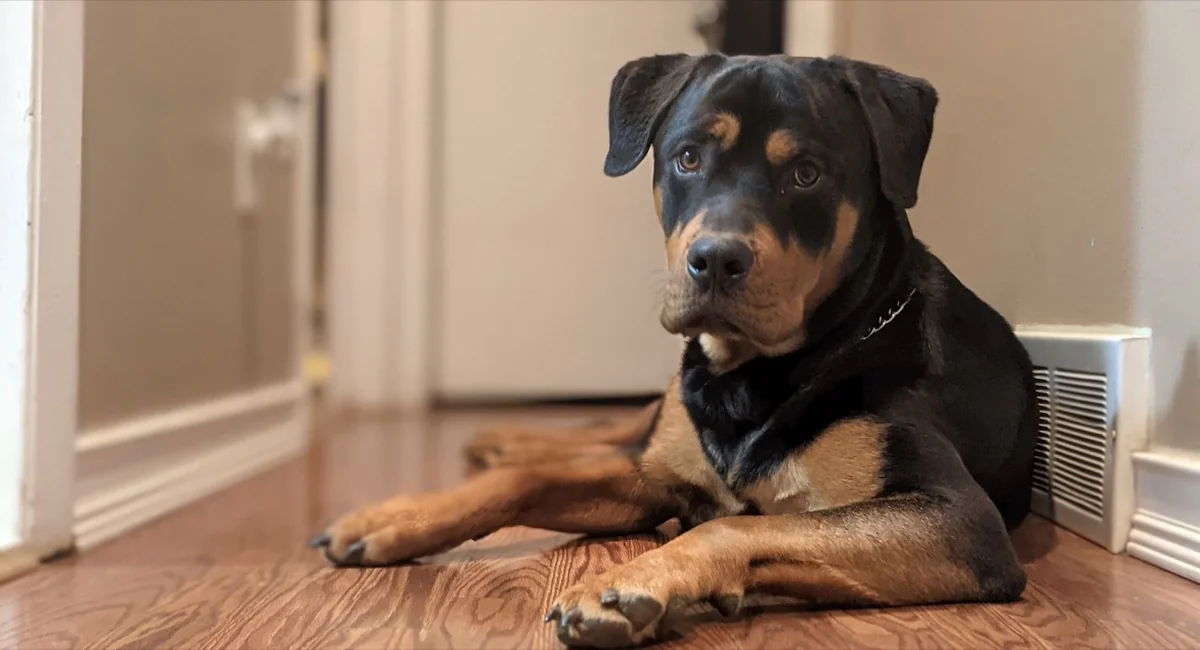
The Rottweilers I have known have been intelligent, physically confident dogs that notice patterns quickly and form strong relationships with their people. That does not make temperament automatic. Genetics, early development, health, learning history, handling and the environment all contribute to the individual in front of me. I avoid describing the breed as a “gentle giant” or a born guard dog because either label can cause an owner to overlook early warning signs.
A well-managed Rottweiler can be a rewarding companion, but the consequences of poor socialisation, pain, unreliable equipment or chaotic handling are greater with a heavy, powerful dog. My starting point is therefore calm prevention: suitable breeding or rescue assessment, reward-based training, controlled exposure, reliable physical management and prompt professional help when behaviour changes.
What the breed’s history tells me—and what it does not
Rottweilers developed from versatile droving and working dogs. That history helps explain why many individuals enjoy purposeful activity, close cooperation and learning tasks. It does not prove that a particular puppy will guard, retrieve, tolerate strangers or live happily with another animal. Breed history is useful context, not a personality certificate.
When I meet an individual, I watch recovery rather than appearance. Can the dog notice something new, gather information and return to normal behaviour? Can the dog disengage, take food, rest and accept gentle handling? A muscular outline tells me very little about those skills. I would rather see calm curiosity and good recovery than dramatic “protection” behaviour celebrated on social media.
Choosing a puppy, adult dog or rescue
If I were choosing a puppy, I would ask how both parents live day to day, what health tests are documented, how the litter is raised and what support follows the sale. I would want evidence, not a promise that a dog comes from “protective lines”. For an adult or rescue dog, I would ask about handling, visitors, dogs, children, resource guarding, travel, veterinary care, bite history and the environments in which behaviour has been observed.
| Question | What I am trying to learn |
|---|---|
| Can I see documented health testing? | Whether decisions are based on evidence rather than appearance or reputation. |
| How does the dog recover after surprise or frustration? | Whether arousal falls again without intimidation or prolonged conflict. |
| What management already works? | Which routines, equipment and distances help the individual feel safe. |
| What has not been tested? | Where I need a cautious plan instead of an assumption. |
| Who will help if difficulties emerge? | Whether qualified veterinary and behaviour support is realistically available. |
Training a Rottweiler without creating conflict
I teach clear behaviours that have an everyday purpose: orientation to the handler, loose-lead walking, recall, stationing on a mat, cooperative handling, giving up objects and settling behind a barrier. I reward the response I want and change distance or difficulty before frustration becomes a confrontation. Strength is not a training method; if I depend on overpowering the dog, the plan has already failed.
Short sessions are useful because they protect timing and keep success repeatable. I train in quiet places before adding movement, visitors or other dogs. I also practise management without waiting for an emergency: putting on equipment, moving behind a gate, entering a vehicle and wearing a basket muzzle can all be taught as ordinary skills. A muzzle is not evidence of a “bad dog”; when properly fitted and positively introduced, it can be one part of a responsible safety plan.
Socialisation means quality, not forced contact
I do not try to make a puppy greet everyone. I want the dog to see people, dogs, traffic, surfaces, handling and household activity at an intensity that allows eating, exploring and recovery. Watching from a safe distance may be more useful than a close encounter. Forced greetings can teach that the handler will not listen when the dog asks for space.
With an adult dog, I work from the behaviour and history I can observe now. I do not flood a worried dog with busy environments to “get it used to them”. If there is lunging, freezing, snapping, guarding, prolonged distress or a sudden change, I involve the vet and an appropriately qualified behaviour professional. Pain and illness can alter behaviour, and an internet breed guide cannot assess that.
Children, visitors and other animals
No dog should be used as a babysitter, and size makes active supervision especially important. I give the dog a protected resting area, prevent children climbing on or cornering the dog, and separate food, chews and high-energy play. Supervision means an adult is close enough to intervene and is paying attention; being somewhere in the same house is not supervision.
For visitors, I prefer a planned barrier and a calm arrival routine. For introductions to other dogs, I consider both dogs’ history, space, equipment and ability to disengage. Living successfully with one animal does not predict every future meeting. I stop an introduction while both dogs are coping rather than waiting for a growl to prove the session lasted too long.
Exercise, enrichment and rest
A Rottweiler needs more than physical exhaustion. I combine age-appropriate walking with sniffing, training, food-search games, problem solving and proper rest. Repetitive high-impact exercise is not my shortcut to a calm puppy, and I ask the vet about exercise where growth, joints, weight, pain or another medical issue is relevant.
I also teach an off-switch. A dog that can only settle after extreme exercise is difficult to manage when weather, injury or ordinary life changes the routine. Predictable rest, chew time, scent work and short learning tasks give me more options than simply increasing miles.
Health and body condition
I keep the dog lean enough to feel the ribs under a light covering and ask the vet to assess body condition rather than relying on a photograph. I discuss breed-relevant screening, joints, heart health and any family history with the breeder and veterinary team. Limping, reluctance to rise, exercise intolerance, breathing changes, skin disease, digestive signs or a sudden behaviour shift deserve professional assessment.
I photograph labels and keep a simple record of weight, food, medication and significant changes. That helps me notice trends and gives the vet better information. Supplements and online product reviews do not replace diagnosis, and a strong-looking dog can still be uncomfortable.
Legal responsibility is based on behaviour as well as breed
Rottweilers are not a prohibited type under the Dangerous Dogs Act simply because they are Rottweilers. However, the law on dogs being dangerously out of control can apply to any breed, including in private places. I therefore check current official guidance, local restrictions, housing or insurance terms and the facts of the individual situation rather than repeating rumours about which breed might be “next”.
If identification as a prohibited type, an incident, a control order or a court matter is involved, I would use the current government guidance and obtain qualified legal advice. I would not rely on a breed article, a social-media measurement graphic or another owner’s case.
My honest suitability test
- Can every regular handler safely manage the dog without relying on strength?
- Can I fund training, insurance, suitable equipment and veterinary care?
- Do I have barriers and routines for visitors, children and deliveries?
- Can I provide consistent learning, enrichment and rest throughout the year?
- Will I seek help early instead of protecting an image of the breed?
If several answers are uncertain, I would pause before acquiring the dog. Admiring a breed is not the same as being able to meet an individual’s needs for the next decade or more.
My conclusion
I do not need to portray the Rottweiler as either monster or mascot. The fairer picture is a capable, powerful breed whose individuals deserve evidence-led breeding, thoughtful selection, reward-based teaching and responsible management. My best experiences came from respecting the dog’s strength while paying even more attention to recovery, clarity and trust.
If I already owned a Rottweiler and felt worried about behaviour, I would increase safe management today, arrange a veterinary check where appropriate and contact an accredited behaviour professional before rehearsals become incidents. Early help protects the dog, the household and the public far better than pride or reassurance.
Sources I checked
For “The Rottweiler: Beyond Hype and Misconceptions”, I checked these current professional and official starting points on 1 August 2026.
Sláinte,
Conor