Safety & Law
Muzzle Training Without Fear: A Safety Skill Every Dog Can Learn
My answer first
I wrote this guide to give owners a practical starting point: A practical Canine Maverick guide to teaching a basket muzzle as normal, comfortable equipment rather than punishment.
My scope: I am sharing general owner education from my experience. I am not diagnosing an individual dog or replacing veterinary, behaviour or legal advice.
A muzzle is safety equipment, not a character judgement
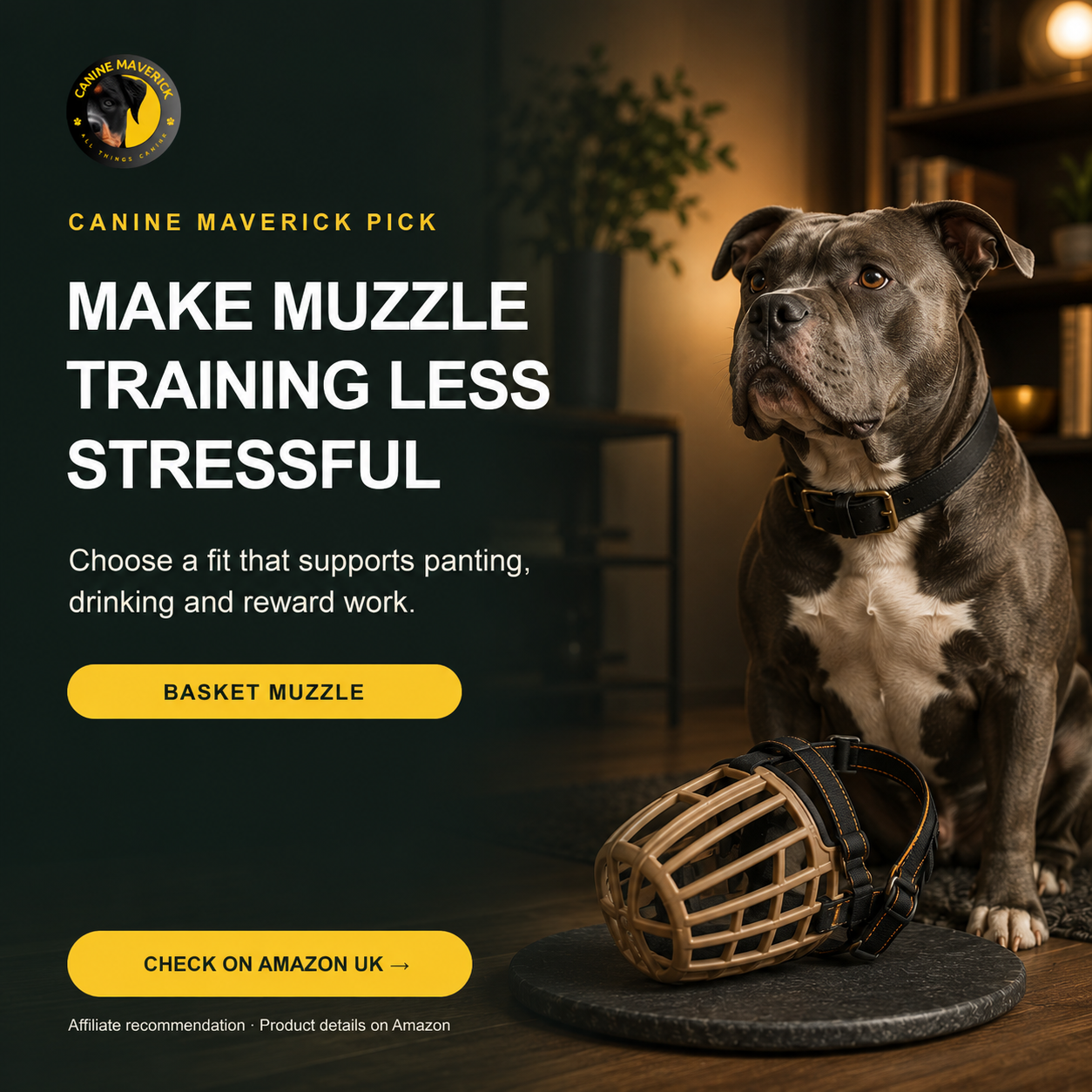
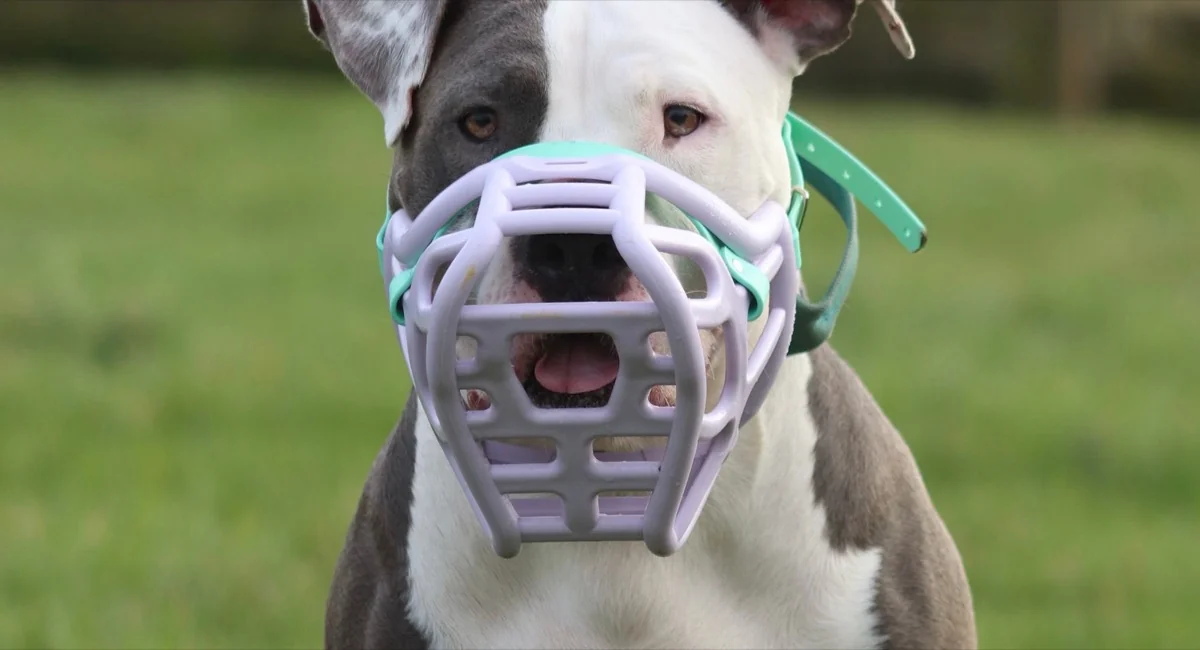
My starting point is simple. A well-fitted basket muzzle can add safety for veterinary care, travel, scavenging or legal compliance. It should allow panting, drinking and reward delivery. Training begins with the muzzle appearing, then voluntary nose entry, before straps or duration are added.
Fit must protect panting and drinking
This is the order I would work through:
- Present the basket and reward any calm investigation.
- Feed through it without fastening.
- Build nose-in duration a second at a time.
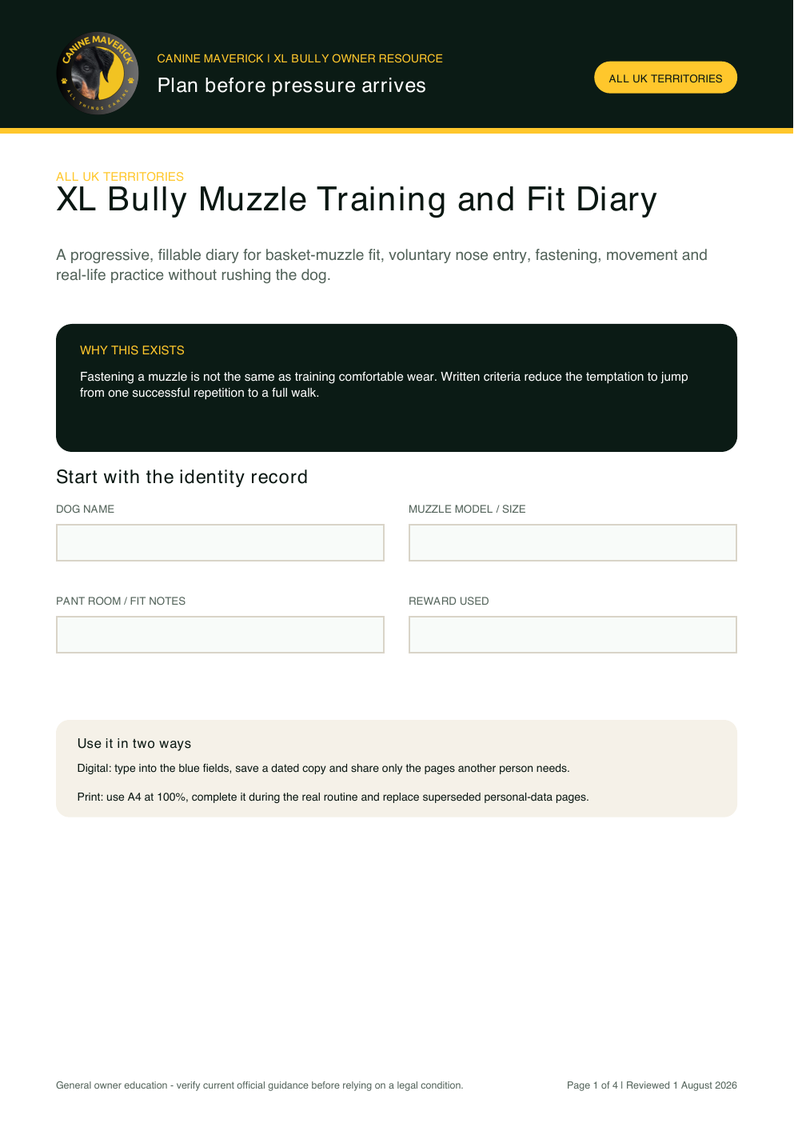
- Touch straps, fasten briefly, then add movement and real settings gradually.
Build voluntary nose entry
I use the dog’s response and the level of risk—not pride, pressure or a fixed timetable—to choose my next step.
| What I notice | What I would do next |
|---|---|
| Dog pushes nose in willingly | Add a little duration. |
| Dog withdraws but returns for food | Keep the step easy and avoid fastening. |
| Dog paws frantically, freezes or avoids the room | Stop and rebuild from an earlier association. |
Practise before the muzzle is essential
Mistakes I would avoid
- Using a fabric grooming muzzle for exercise
- Choosing a basket too small to pant
- First fitting during a crisis
- Leaving a muzzled dog unsupervised
Build a safety system that does not depend on luck
I treat the subject of “Muzzle Training Without Fear: A Safety Skill Every Dog Can Learn” as a layered safety problem. Training is one layer, but doors, gates, distance, equipment, written handovers and adult supervision do the immediate prevention work. Present the basket and reward any calm investigation. I ask what happens if one layer fails: if a clip opens, a visitor ignores the sign or the usual handler is unavailable. Adding a second sensible barrier is not overreacting; it is how I reduce the consequence of an ordinary human mistake.
A realistic example
A practical example is an unexpected visitor. I do not try to train while the doorbell is ringing and everyone is talking. I move the dog behind the planned barrier, give the visitor instructions and only consider a controlled introduction if the dog, handler and environment are genuinely ready. Feed through it without fastening. If the plan cannot be followed by another competent adult, I simplify it and write it down.
What I record and why
I log triggers, distance, body language, equipment, handler and recovery. The early sign may be dog pushes nose in willingly; in that situation, add a little duration. Near misses count as information even when nobody was hurt. I review them while the details are fresh and change the environment before the same chain of events can repeat.
My seven-day reset
For “Muzzle Training Without Fear: A Safety Skill Every Dog Can Learn”, I use a week as a review window, not as a promise that the issue will be solved in seven days. The aim is to replace guesswork with a calm baseline and a repeatable next step.
- Day 1: Write down the baseline for “Muzzle Training Without Fear: A Safety Skill Every Dog Can Learn” before changing anything.
- Day 2: Present the basket and reward any calm investigation.
- Day 3: Repeat the easiest useful step and finish while the dog is coping.
- Day 4: Review the environment, timing and every person involved.
- Day 5: Feed through it without fastening.
- Day 6: Build nose-in duration a second at a time.
- Day 7: Compare the week with the baseline and choose one next adjustment.
How I keep the advice safe
While applying “Muzzle Training Without Fear: A Safety Skill Every Dog Can Learn”, I stop if the dog becomes distressed, painful, unusually quiet, unable to recover or unsafe to handle. I do not use a website article to diagnose disease, settle a legal case or design an individual behaviour programme. I use it to prepare better questions, improve immediate management and recognise when my vet, an appropriately qualified behaviour professional or a solicitor needs to see the individual facts.
The questions I use before changing the plan
I keep my review of “Muzzle Training Without Fear: A Safety Skill Every Dog Can Learn” specific to the dog in front of me. My first practical anchor is: Present the basket and reward any calm investigation. From there I compare the response with the original baseline, not with somebody else’s highlight reel. If dog pushes nose in willingly, I would add a little duration. I also look for unintended effects: a plan that improves one behaviour while increasing fear, pain or household risk is not a successful plan.
- Which layer prevented an incident?
- What could have failed?
- Did every adult follow the same handover?
- What was the earliest warning sign?
- Which physical safeguard will I improve now?
I share my notes from “Muzzle Training Without Fear: A Safety Skill Every Dog Can Learn” with the relevant professional when the issue is medical, legally sensitive or carries a realistic risk to people or animals. Clear dates, short descriptions and photographs or video—taken only when safe—help another person understand the sequence. They also stop me quietly rewriting the story after a good or bad day. That honesty is central to how I want Canine Maverick guidance to work.
Sources I checked and further reading
I checked these sources on 1 August 2026. Product availability, law and professional guidance can change, so I always follow the linked source for current details.
Sláinte,
Conor